
Japanese Chicken Yakitori
Yakitori is Japanese chicken skewers grilled and brushed with tare — a reduction of soy, mirin, sake and sugar. The secret to the gloss is brushing the sauce on in three or four passes at the end of the grilling, never at the start.
- Prep
- 30 min
- Cook
- 20 min
- Total
- 50 min
- Calories
- 290
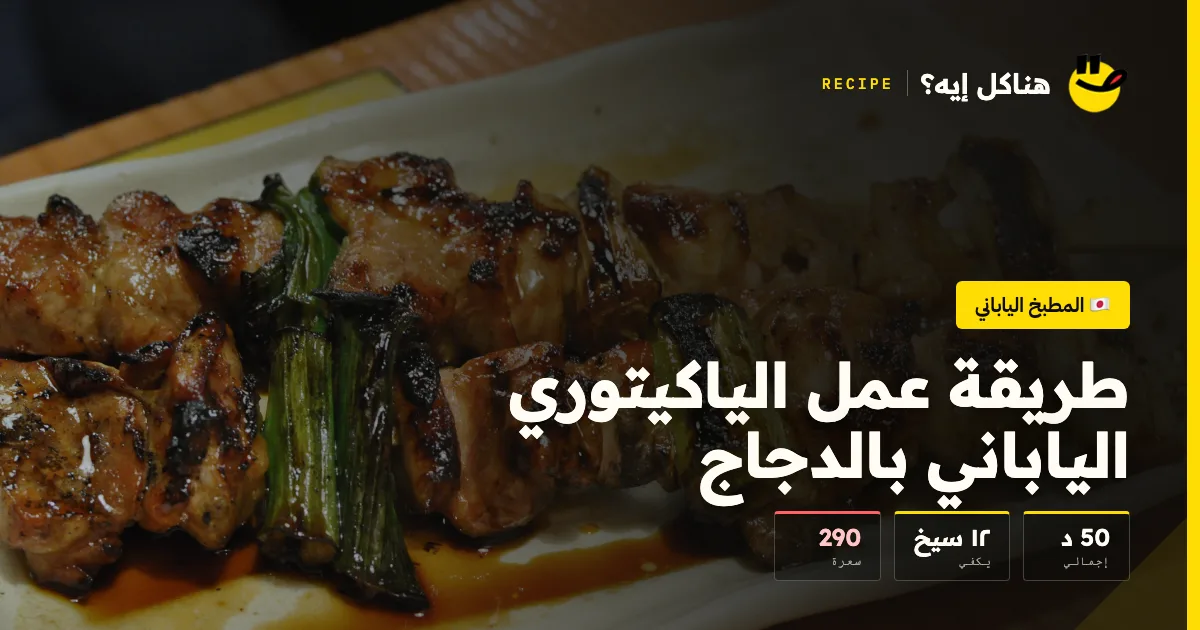
Photo: Ocdp — CC0 · Wikimedia Commons
Yakitori is the staple of Japan's small drinking bars, and the idea is simple: small pieces of chicken on skewers, and a sauce built up layer over layer. The whole secret is in the timing.
Method
-
1
The tare sauce
Combine the soy, mirin, sake, sugar, garlic and ginger in a small pan and bring to a gentle boil over medium heat. Reduce by a third — about 12-15 minutes — until the sauce has the body of a light syrup and coats the back of a spoon. Strain it and let it cool; it thickens further as it cools.
-
2
Cutting the chicken
Cut the thighs into even 3cm cubes — the evenness is not cosmetic, it is what makes every piece finish at the same moment. Leave the skin on: it is the source of the flavour and the juiciness, and it crisps over the fire.
-
3
Threading the skewers
Thread each skewer alternating chicken and spring onion, roughly three pieces of chicken per skewer. Press the pieces together, not spaced apart — gaps let the edges burn. Leave 5cm at the end to hold.
-
4
The first grilling, without sauce
Brush the skewers with oil only and grill over medium-high heat (charcoal, a grill or a ridged pan) until cooked and coloured — 8-10 minutes, turning every two. Do not put the sauce on yet — its sugar will burn before the chicken is cooked and turn bitter.
-
5
Brushing in passes
As the chicken approaches done, start brushing on the sauce and returning the skewers to the fire for 30 seconds until it colours and gleams. Repeat this three or four times — each layer dries and builds the gloss over the one before. This is the step that separates real yakitori from ordinary marinated skewers.
-
6
Serving
Check the internal temperature has reached 75°C (thighs take more heat than breast). Lift the skewers, scatter over the sesame and shichimi, and serve at once with the remaining tare in a small dish. Yakitori is eaten straight off the skewer with your hands.
Cooked it? Rate it
Your rating tells the next cook whether this recipe is worth their time.
✓ Thanks — your rating is in.
Tips that actually matter
- Sauce at the end only — the sugar burns in the first minute over high heat and turns bitter.
- Soak wooden skewers for 30 minutes so they do not burn, or wrap the ends in foil.
- Thighs beat breast here by a wide margin — the fat protects them from drying over high heat.
- Tare keeps a month in the fridge and improves with use — in Japan the same batch is kept going for years.
People also ask
What is tare sauce?
A fundamental Japanese sauce of soy, mirin, sake and sugar reduced by a third over heat. It is used for yakitori and teriyaki, keeps a month in the fridge, and improves with repeated use.
Why not brush the sauce on from the start?
Because its sugar burns in the first minute over high heat and turns bitter before the chicken is cooked. Grill with oil first, then brush the sauce on in three or four passes with 30 seconds over the fire between them.
What can replace mirin and sake?
For mirin: white grape juice with a spoonful of rice vinegar. For sake: chicken stock. The flavour will be simpler but the sauce works — what matters most is reducing it by a third.
Breast or thigh?
Thigh by a wide margin — the fat and skin protect it from drying over high heat and give a stronger flavour. Breast dries fast and needs to hit exactly 74°C internally.
Cook mode
Japanese Chicken Yakitori
-
1
The tare sauce
Combine the soy, mirin, sake, sugar, garlic and ginger in a small pan and bring to a gentle boil over medium heat. Reduce by a third — about 12-15 minutes — until the sauce has the body of a light syrup and coats the back of a spoon. Strain it and let it cool; it thickens further as it cools.
-
2
Cutting the chicken
Cut the thighs into even 3cm cubes — the evenness is not cosmetic, it is what makes every piece finish at the same moment. Leave the skin on: it is the source of the flavour and the juiciness, and it crisps over the fire.
-
3
Threading the skewers
Thread each skewer alternating chicken and spring onion, roughly three pieces of chicken per skewer. Press the pieces together, not spaced apart — gaps let the edges burn. Leave 5cm at the end to hold.
-
4
The first grilling, without sauce
Brush the skewers with oil only and grill over medium-high heat (charcoal, a grill or a ridged pan) until cooked and coloured — 8-10 minutes, turning every two. Do not put the sauce on yet — its sugar will burn before the chicken is cooked and turn bitter.
-
5
Brushing in passes
As the chicken approaches done, start brushing on the sauce and returning the skewers to the fire for 30 seconds until it colours and gleams. Repeat this three or four times — each layer dries and builds the gloss over the one before. This is the step that separates real yakitori from ordinary marinated skewers.
-
6
Serving
Check the internal temperature has reached 75°C (thighs take more heat than breast). Lift the skewers, scatter over the sesame and shichimi, and serve at once with the remaining tare in a small dish. Yakitori is eaten straight off the skewer with your hands.



Comments
Cooked it? Tell us how it went, or ask a question — we read every comment.