
Gazan Sumagiyya with Chard and Lamb
Sumagiyya is a Gazan stew of chard, chickpeas and lamb, made sour with sumac and creamy with tahini. Its secret is that the sumac is steeped in warm water and strained — added as ground powder it gives an earthy taste and a gritty texture.
- Prep
- 25 min
- Cook
- 60 min
- Total
- 85 min
- Calories
- 420
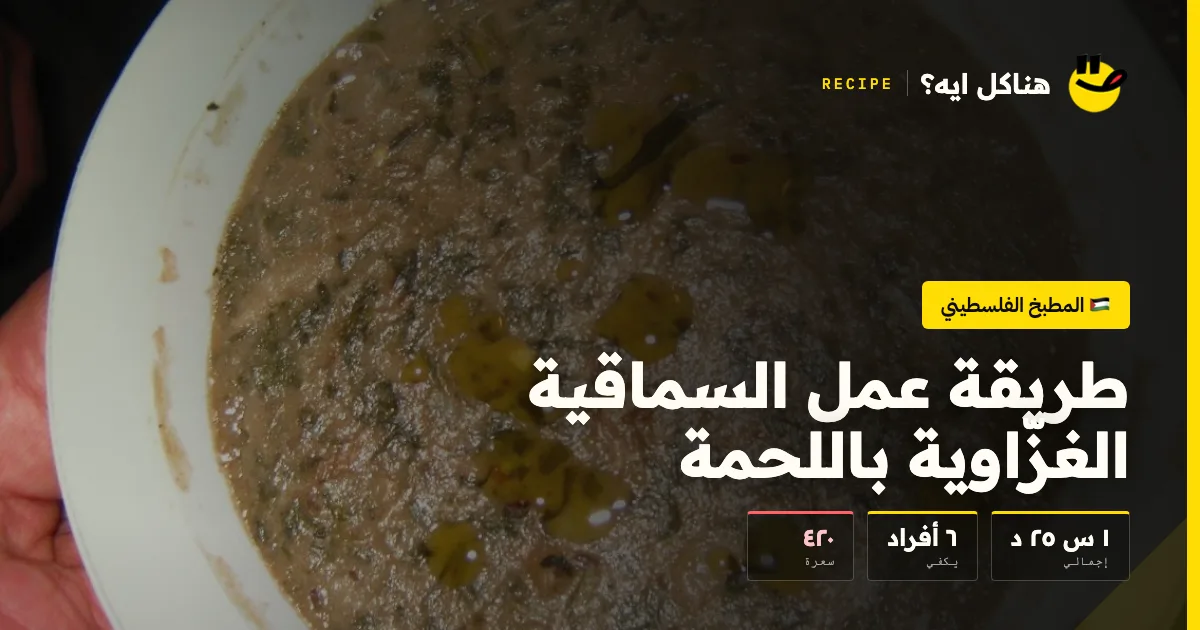
Sumagiyya is Gaza's best-known dish by some distance, made for occasions and during Ramadan. It is eaten cold or at room temperature rather than hot — which surprises the Egyptian palate, but it is the original way, and the flavour reads more clearly once it cools.
Method
-
1
Steep the sumac
Soak the sumac in warm water for thirty minutes, then strain it through a cloth and squeeze it well. It is the red water you use — the powder itself is discarded.
⏱ 32 min -
2
Cook the lamb
Simmer the lamb in water to cover for forty-five minutes until tender, keeping the broth. Skim the foam in the first ten minutes.
⏱ 45 min -
3
Soften the onion
Soften the onion in olive oil until translucent and golden, then add the chopped chard and stir until it wilts and its water reduces.
⏱ 12 min -
4
Tahini and flour
Whisk the tahini with the flour and the strained sumac water until completely smooth and free of lumps. The flour is the thickener here.
⏱ 5 min -
5
Combine
Add the mixture to the chard along with the lamb, chickpeas and some broth, and stir constantly over medium heat for fifteen minutes until it thickens. Stirring stops the tahini seizing.
⏱ 15 min -
6
Make the daqqa
Crush the garlic and chilli with a pinch of salt, fry them in a spoonful of oil, and stir them into the stew for the last two minutes.
⏱ 4 min -
7
Serve
Take it off the heat and let it cool to room temperature. It is eaten warm or cold with bread — that is the authentic way.
⏱ 30 min
Cooked it? Rate it
Your rating tells the next cook whether this recipe is worth their time.
✓ Thanks — your rating is in.
Tips that actually matter
- Steep and strain the sumac — powder added directly gives an earthy taste and a gritty texture.
- Constant stirring after the tahini goes in is compulsory, or it will seize and separate.
- It is eaten cold or at room temperature, not hot — the flavour reads more clearly that way.
- Chard is the original; spinach is an acceptable substitute but lighter in flavour.
People also ask
Can I use spinach instead of chard?
You can, and the flavour is lighter. Chard has a faint bitterness that balances the sumac's sourness, and that is part of the dish's character.
Why did my tahini seize?
You did not stir after adding it, or the heat was too high. Stir constantly over medium heat.
How much sumac?
A full cup of ground sumac yields about two cups of concentrated liquid. That quantity is what gives the distinctive sourness — less and it is simply a chard stew.
Is it eaten hot or cold?
Warm or cold, and that is the authentic Gazan way. Hot, it masks part of the sour flavour.
Cook mode
Gazan Sumagiyya with Chard and Lamb
-
1
Steep the sumac
Soak the sumac in warm water for thirty minutes, then strain it through a cloth and squeeze it well. It is the red water you use — the powder itself is discarded.
-
2
Cook the lamb
Simmer the lamb in water to cover for forty-five minutes until tender, keeping the broth. Skim the foam in the first ten minutes.
-
3
Soften the onion
Soften the onion in olive oil until translucent and golden, then add the chopped chard and stir until it wilts and its water reduces.
-
4
Tahini and flour
Whisk the tahini with the flour and the strained sumac water until completely smooth and free of lumps. The flour is the thickener here.
-
5
Combine
Add the mixture to the chard along with the lamb, chickpeas and some broth, and stir constantly over medium heat for fifteen minutes until it thickens. Stirring stops the tahini seizing.
-
6
Make the daqqa
Crush the garlic and chilli with a pinch of salt, fry them in a spoonful of oil, and stir them into the stew for the last two minutes.
-
7
Serve
Take it off the heat and let it cool to room temperature. It is eaten warm or cold with bread — that is the authentic way.


Comments
Cooked it? Tell us how it went, or ask a question — we read every comment.