
Aleppo Qubbeh Safarjalieh with Quince and Pomegranate Molasses
The secret to qubbeh safarjalieh is that the quince goes into the broth after the meat is nearly cooked, cooks for only 20-25 minutes until a knife goes in while it still holds its shape, and the qubbeh are fried first and added in the last 10 minutes over low heat. Quince cooked from the beginning gets mashed, and raw qubbeh falls apart in the sauce.
- Prep
- 60 min
- Cook
- 100 min
- Total
- 170 min
- Calories
- 705
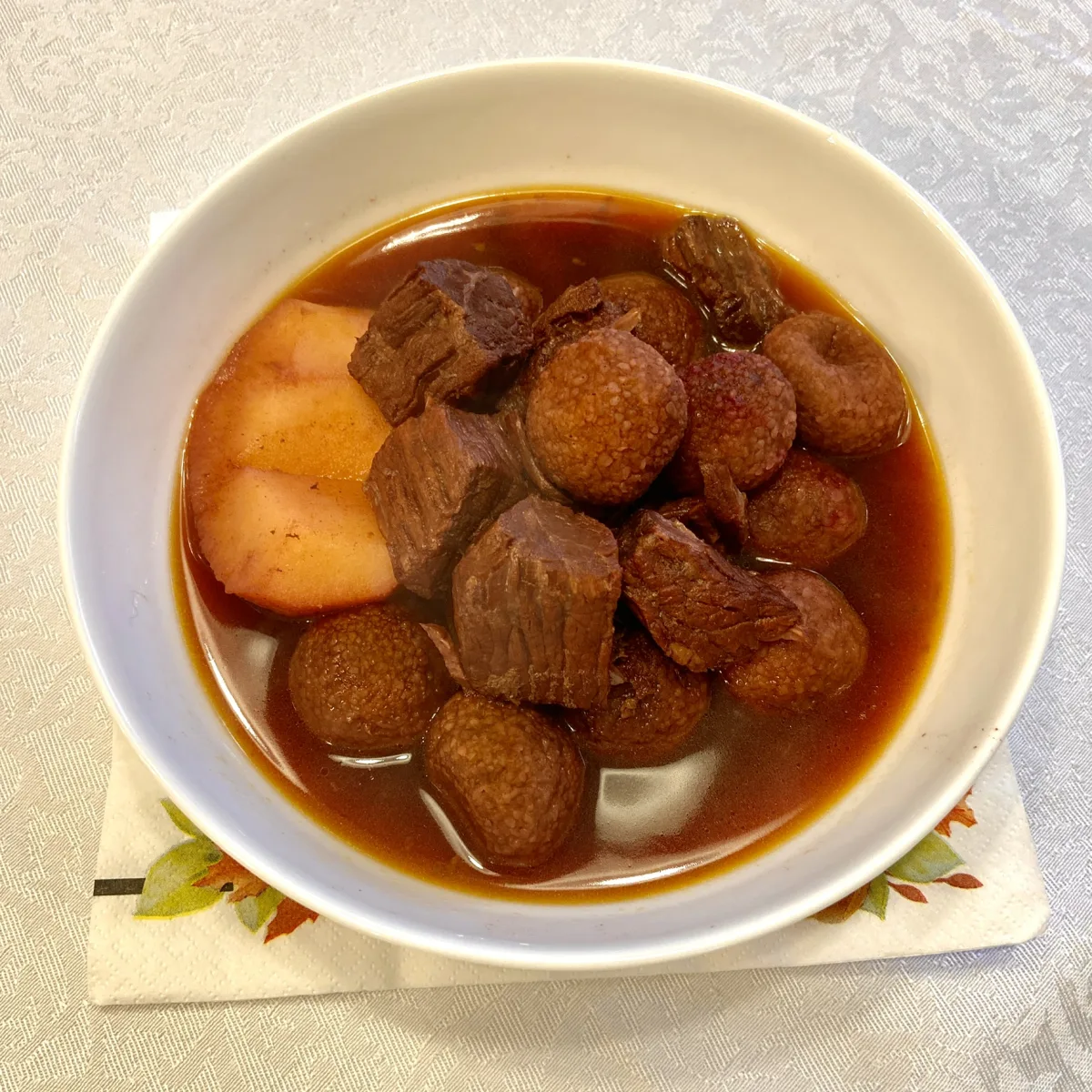
Photo: Bee Eater007 / Wikimedia Commons · CC BY-SA 4.0 · https://commons.wikimedia.org/wiki/File:Kibbeh_Safarjaliyeh.jpg
Qubbeh safarjalieh is one of Aleppo's authentic winter dishes: small stuffed qubbeh simmered with pieces of meat and quince in a sweet-and-sour pomegranate molasses broth, finished with a garlic and dried mint tarka. It is made during quince season from October through January, and served with vermicelli rice or bread.
Method
-
1
Boiling the meat
Place the meat in 6 cups of water, skim off the foam as soon as it boils, add the onion and spices, cover, and simmer over low heat for 1 hour until the meat is nearly tender. You will need about 4 cups of broth.
⏱ 60 min -
2
Qubbeh dough
Wash the fine bulgur, squeeze it dry, and let it rest for 10 minutes to absorb moisture. Then knead it in a qubbeh machine or food processor with the lean meat, onion, salt, cumin, and splashes of ice water for 8 minutes, until it forms a smooth, cohesive dough without any grains.
⏱ 12 min -
3
The filling
Sauté the onion for 3 minutes, add the minced meat until its liquid evaporates, season with salt and spices, stir in the pine nuts at the end, and let it cool.
⏱ 10 min -
4
Shaping the small qubbeh
Take a ball the size of a walnut (25-30 g), make an indentation with your finger while rotating it until the walls are thin, add 1 teaspoon of filling, and seal it into a round ball with wet hands. You will get about 24 qubbeh.
⏱ 30 min -
5
Frying the qubbeh
Fry the qubbeh in hot oil for 3-4 minutes until they develop a golden crust, then remove them to paper towels. The crust is what holds them together in the sauce, and they will finish cooking in the broth.
⏱ 10 min -
6
Browning the quince
Rub the fuzz off the quince with a towel, wash it, cut it into quarters or eighths, and remove the tough core and seeds, leaving the skin on so it holds its shape. Brown it in ghee for 5-6 minutes until the surface is golden. If it has to wait, place it in water with lemon juice so it doesn't darken.
⏱ 10 min -
7
Cooking with pomegranate molasses
Add the quince to the meat and its broth along with the pomegranate molasses and salt, bring it to a boil, and reduce the heat for 20-25 minutes until a knife easily pierces the quince without falling apart. Then gently drop in the qubbeh and let them simmer for 10 minutes over low heat without stirring — just gently shake the pot.
⏱ 35 min -
8
Garlic and mint tarka
In a small pan, melt the tablespoon of ghee and sauté the garlic for 1 minute, then add the dried mint for seconds, and pour it over the pot. Taste, and if it is too tart, add the sugar. Serve hot with vermicelli rice or bread.
⏱ 3 min
Cooked it? Rate it
Your rating tells the next cook whether this recipe is worth their time.
✓ Thanks — your rating is in.
Tips that actually matter
- Choose a firm yellow quince with a strong aroma; green quince is not yet ripe and remains hard and astringent even after cooking.
- If you are in a rush, use frozen store-bought mini qubbeh without thawing them; fry them and follow the exact same steps.
- Many Aleppine households add 1 teaspoon of tomato paste along with the pomegranate molasses for a deeper red color — this is optional.
- Pomegranate molasses varies in tartness from one brand to another, so start with 3 tablespoons and taste before adding the fourth.
People also ask
Why did the quince turn to mush or stay hard?
If it turned to mush, it went into the broth too early or was peeled. If it stayed hard, the quince was unripe, or there wasn't enough broth with the heat too low. Add it after the meat is nearly done, leave the skin on, and test it with a knife starting at minute 15.
Why does the qubbeh fall apart in the dish?
Raw qubbeh or qubbeh with a very thin crust will fall apart when stirred in a boiling sauce. Fry the qubbeh first until it forms a crust, add them in the last 10 minutes, and do not stir with a spoon — gently shake the pot instead.
What can I substitute for pomegranate molasses?
The closest substitute is concentrated sour pomegranate juice: simmer 1.5 cups of pomegranate juice until reduced to half a cup. If unavailable, use the juice of a large lemon with a tablespoon of sugar, though the flavor will be lighter and lack the same depth.
Can I freeze qubbeh safarjalieh?
It is best to freeze the stuffed qubbeh raw or fried for up to 3 months, and cook the quince fresh on the day you serve it, because cooked quince becomes too soft after thawing. The finished dish can be stored in the fridge for two days.
Cook mode
Aleppo Qubbeh Safarjalieh with Quince and Pomegranate Molasses
-
1
Boiling the meat
Place the meat in 6 cups of water, skim off the foam as soon as it boils, add the onion and spices, cover, and simmer over low heat for 1 hour until the meat is nearly tender. You will need about 4 cups of broth.
-
2
Qubbeh dough
Wash the fine bulgur, squeeze it dry, and let it rest for 10 minutes to absorb moisture. Then knead it in a qubbeh machine or food processor with the lean meat, onion, salt, cumin, and splashes of ice water for 8 minutes, until it forms a smooth, cohesive dough without any grains.
-
3
The filling
Sauté the onion for 3 minutes, add the minced meat until its liquid evaporates, season with salt and spices, stir in the pine nuts at the end, and let it cool.
-
4
Shaping the small qubbeh
Take a ball the size of a walnut (25-30 g), make an indentation with your finger while rotating it until the walls are thin, add 1 teaspoon of filling, and seal it into a round ball with wet hands. You will get about 24 qubbeh.
-
5
Frying the qubbeh
Fry the qubbeh in hot oil for 3-4 minutes until they develop a golden crust, then remove them to paper towels. The crust is what holds them together in the sauce, and they will finish cooking in the broth.
-
6
Browning the quince
Rub the fuzz off the quince with a towel, wash it, cut it into quarters or eighths, and remove the tough core and seeds, leaving the skin on so it holds its shape. Brown it in ghee for 5-6 minutes until the surface is golden. If it has to wait, place it in water with lemon juice so it doesn't darken.
-
7
Cooking with pomegranate molasses
Add the quince to the meat and its broth along with the pomegranate molasses and salt, bring it to a boil, and reduce the heat for 20-25 minutes until a knife easily pierces the quince without falling apart. Then gently drop in the qubbeh and let them simmer for 10 minutes over low heat without stirring — just gently shake the pot.
-
8
Garlic and mint tarka
In a small pan, melt the tablespoon of ghee and sauté the garlic for 1 minute, then add the dried mint for seconds, and pour it over the pot. Taste, and if it is too tart, add the sugar. Serve hot with vermicelli rice or bread.


Comments
Cooked it? Tell us how it went, or ask a question — we read every comment.