
Levantine Makdous Fatteh
The secret to makdous fatteh is that the bread is toasted until completely crispy, and the tomato sauce is simmered until thick before pouring over it, and the assembly happens right before eating and the yogurt is at room temperature. Any extra water or early assembly turns the fatteh into a soggy dough.
- Prep
- 35 min
- Cook
- 60 min
- Total
- 95 min
- Calories
- 630
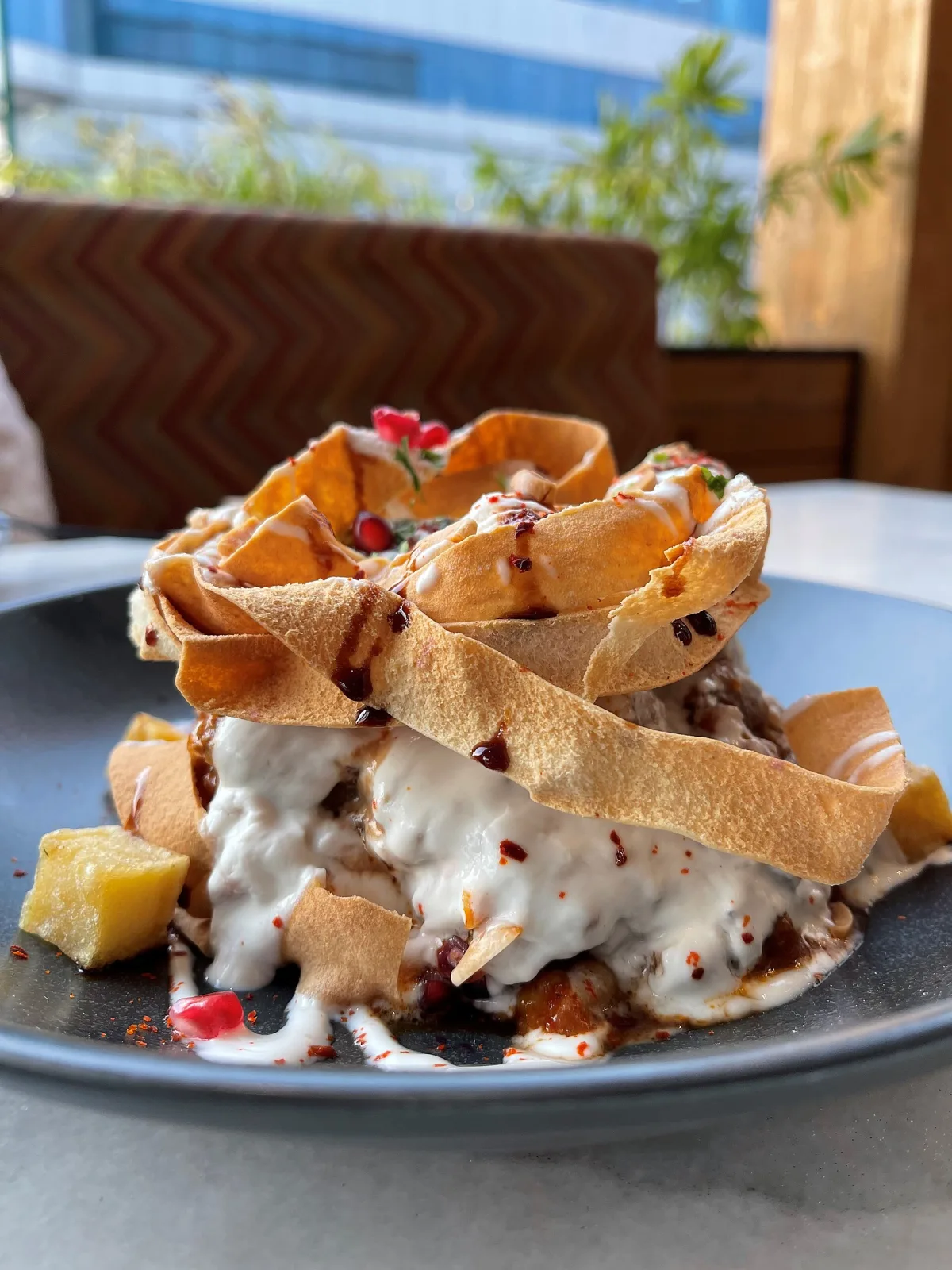
Photo: Lam-w / Wikimedia Commons · CC BY-SA 4.0 · https://commons.wikimedia.org/wiki/File:%D9%81%D8%AA%D8%A9_%D8%A7%D9%84%D8%A8%D8%A7%D8%B0%D9%86%D8%AC%D8%A7%D9%86.jpg
Makdous fatteh is one of the famous Levantine fatteh dishes in Damascus: small eggplants — of the type used to make makdous — are fried, stuffed with minced meat and pine nuts, cooked in a garlic tomato sauce, then layered over toasted Arabic bread and covered with yogurt with tahini and garlic, and pine nuts fried in ghee. A feast and Ramadan dish, it tastes sour, creamy, and crispy all at once.
Method
-
1
Preparing the Eggplant
Wash the eggplants and leave the stem, peel them in longitudinal lines (peeled and unpeeled stripes), and make a lengthwise slit in each piece without reaching the ends or the other side. The slit is the filling place, and the striped peeling allows the eggplant to absorb the sauce without falling apart.
⏱ 10 min -
2
Frying the Eggplant
Heat the oil over medium-high heat, and fry the eggplant in batches for 6–8 minutes with turning until golden and soft, then remove to paper towels. Do not overcrowd the pan so the oil doesn't cool down and the eggplant doesn't absorb extra oil.
⏱ 20 min -
3
Meat Filling
In another pan, sauté the onion in a spoonful of oil for 3 minutes, add the meat and stir until crumbled, dried of its water, and its color changes, then add the spices, half a spoonful of salt, pepper, and finally the pine nuts.
⏱ 10 min -
4
Stuffing the Eggplant
Gently open the slit with a spoon, stuff each eggplant with two spoonfuls of filling, and arrange them side by side in a wide pot or baking dish with the opening facing up.
⏱ 8 min -
5
Tomato Sauce
Mix the grated tomatoes with the paste, garlic, pomegranate molasses, water, and remaining salt, and pour it around the eggplant. Let it boil, then for 20 minutes on low heat uncovered — or 25 minutes in an 180° oven — until the sauce thickens and becomes a gravy rather than a soup.
⏱ 20 min -
6
Toasting the Bread
Cut the bread into 3 cm squares and spread them on a tray, and toast them in an 180° oven for 10–12 minutes with turning once until golden and completely crispy — or fry them in oil if you want them like restaurants.
⏱ 12 min -
7
Yogurt Sauce
Whisk the yogurt with tahini, garlic, lemon, and a pinch of salt until smooth and glossy, and leave it out of the fridge while you prepare — cold yogurt on hot sauce cools down the whole fatteh.
⏱ 5 min -
8
Assembly and Serving
In a deep dish, spread the toasted bread and pour over it 3–4 spoonfuls of tomato sauce only, arrange the stuffed eggplant over it and cover with the yogurt sauce. Fry the pine nuts in the ghee until golden and pour with its ghee on top, sprinkle the parsley, and serve immediately.
⏱ 5 min
Cooked it? Rate it
Your rating tells the next cook whether this recipe is worth their time.
✓ Thanks — your rating is in.
Tips that actually matter
- In Egypt, use small black eggplant (arous) or slender romy; the important thing is that it is small and has few seeds so it can be stuffed and remain whole.
- Want it lighter? Brush the eggplant with 3 tablespoons of oil and roast in a 220° oven for 25 minutes instead of frying — it will come out a bit drier but tastes great.
- Makdous fatteh without meat: stuff the eggplant with a cup of boiled chickpeas half mashed with a sautéed onion and pine nuts, and complete the same steps.
- You can prepare everything a day ahead: eggplant in its sauce in the fridge, toasted bread in a closed container, and whipped yogurt. Reheat the eggplant and assemble at mealtime.
People also ask
Why does the fatteh become soggy and wet?
Either the bread wasn't toasted until crispy, or the sauce was thin and had a lot of water, or the fatteh was assembled well before eating. Toast the bread until golden and completely dry, simmer the sauce until thick, pour only small spoonfuls of it onto the bread, and assemble right before serving.
Can I make makdous fatteh without frying?
Yes. Brush the eggplant with oil and roast it in a 220° oven for about 25 minutes until soft and golden, and toast the bread in the oven as well. The taste will be lighter and the texture close, the difference is that fried eggplant is softer and richer.
What is the difference between makdous fatteh and chickpea fatteh?
Chickpea fatteh is based on boiled chickpeas with their broth over bread topped with tahini yogurt. Makdous fatteh is based on small fried eggplant stuffed with meat and cooked in tomato sauce, so its taste is sour from the tomatoes and pomegranate molasses, and it is made more for gatherings.
Can I omit the tahini in the yogurt sauce?
You can remove it and make the yogurt with garlic only, and this is done in many homes, but the tahini thickens the sauce and gives it the distinctive sesame taste. If the yogurt is thin, strain it for half a minute in a strainer before whipping it.
Cook mode
Levantine Makdous Fatteh
-
1
Preparing the Eggplant
Wash the eggplants and leave the stem, peel them in longitudinal lines (peeled and unpeeled stripes), and make a lengthwise slit in each piece without reaching the ends or the other side. The slit is the filling place, and the striped peeling allows the eggplant to absorb the sauce without falling apart.
-
2
Frying the Eggplant
Heat the oil over medium-high heat, and fry the eggplant in batches for 6–8 minutes with turning until golden and soft, then remove to paper towels. Do not overcrowd the pan so the oil doesn't cool down and the eggplant doesn't absorb extra oil.
-
3
Meat Filling
In another pan, sauté the onion in a spoonful of oil for 3 minutes, add the meat and stir until crumbled, dried of its water, and its color changes, then add the spices, half a spoonful of salt, pepper, and finally the pine nuts.
-
4
Stuffing the Eggplant
Gently open the slit with a spoon, stuff each eggplant with two spoonfuls of filling, and arrange them side by side in a wide pot or baking dish with the opening facing up.
-
5
Tomato Sauce
Mix the grated tomatoes with the paste, garlic, pomegranate molasses, water, and remaining salt, and pour it around the eggplant. Let it boil, then for 20 minutes on low heat uncovered — or 25 minutes in an 180° oven — until the sauce thickens and becomes a gravy rather than a soup.
-
6
Toasting the Bread
Cut the bread into 3 cm squares and spread them on a tray, and toast them in an 180° oven for 10–12 minutes with turning once until golden and completely crispy — or fry them in oil if you want them like restaurants.
-
7
Yogurt Sauce
Whisk the yogurt with tahini, garlic, lemon, and a pinch of salt until smooth and glossy, and leave it out of the fridge while you prepare — cold yogurt on hot sauce cools down the whole fatteh.
-
8
Assembly and Serving
In a deep dish, spread the toasted bread and pour over it 3–4 spoonfuls of tomato sauce only, arrange the stuffed eggplant over it and cover with the yogurt sauce. Fry the pine nuts in the ghee until golden and pour with its ghee on top, sprinkle the parsley, and serve immediately.



Comments
Cooked it? Tell us how it went, or ask a question — we read every comment.