
Syrian Halawet el Jibn with Clotted Cream
The secret to Halawet el Jibn is that the cheese should be sweet, not salty, and stretchy (desalted Akkawi cheese with mozzarella in the middle), and mixed with the semolina dough over low heat until the dough becomes a single, glossy, stretchy mass like chewing gum — and as soon as it reaches this stage, it is removed from the heat. Excess heat separates the cheese fat and makes the dough tear.
- Prep
- 35 min
- Cook
- 30 min
- Total
- 4 hr
- Calories
- 530
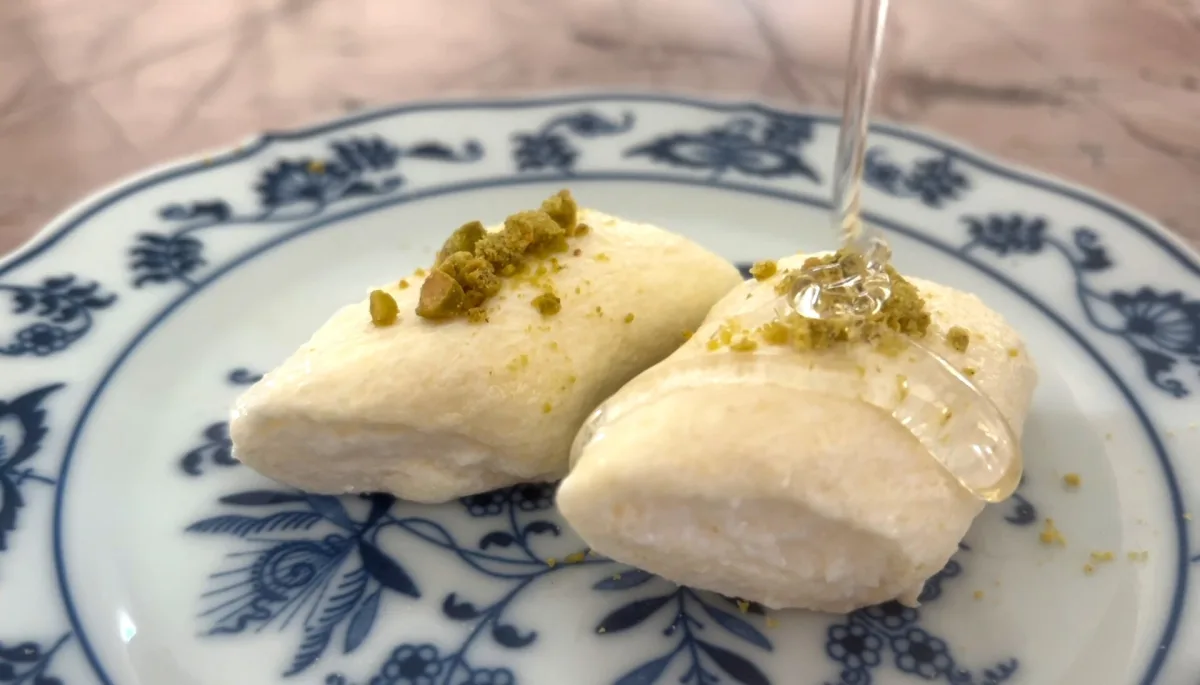
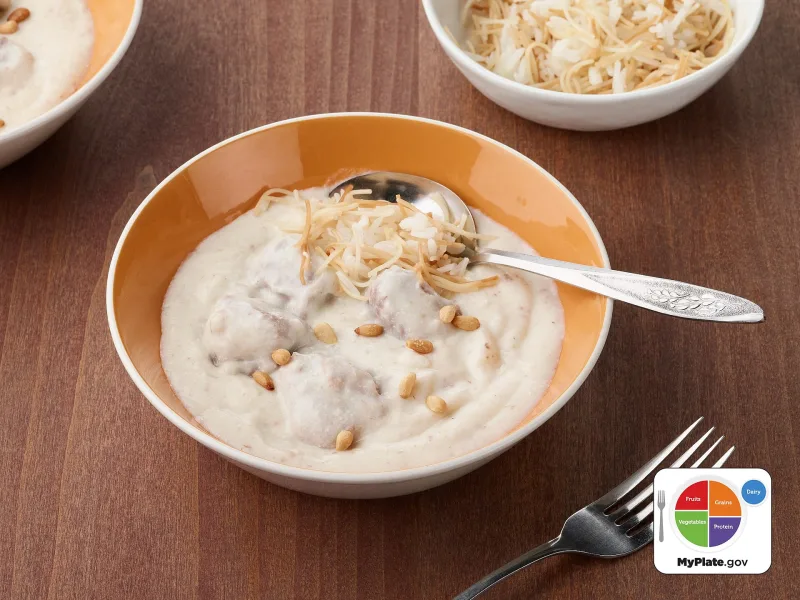
Photo: 白と赤茶 / Wikimedia Commons · CC BY-SA 4.0 · https://commons.wikimedia.org/wiki/File:Halawet_el_Jibn_with_attar.jpg
Halawet el Jibn is one of the most famous sweets from Hama and Homs in Syria: a semolina and sweet white cheese dough that stretches and rolls out thinly, wrapped around cold clotted cream, garnished with pistachios and rose jam, and served with cold sugar syrup. It is made at home in a single non-stick pot without an oven, where the important part is choosing the cheese and rolling it out quickly while it is hot.
Method
-
1
Cold Sugar Syrup
In a small pot, put 2 cups of sugar with 1 cup of water, stir until the sugar dissolves before it boils, then let it boil for 10 minutes without stirring. Add the lemon juice in the last two minutes and the orange blossom water after turning off the heat, and let it cool completely; Halawet el Jibn is served with a cold syrup so it doesn't melt the cream.
⏱ 12 min -
2
The Clotted Cream
Whisk the cold milk with the cornstarch and sugar before heating so the starch doesn't clump, and stir over medium heat without stopping for 6-8 minutes until it thickens and coats the back of a spoon. Remove it and add the heavy cream and rose water, cover it with plastic wrap touching its surface so it doesn't form a skin, and put it in the fridge until it sets.
⏱ 10 min -
3
Desalting and Grating the Cheese
If the Akkawi is salty, cut it into slices and soak it in cold water, changing the water every hour for 3 hours, and taste a piece: it must be almost completely free of salty taste. Dry it well with a towel, and grate it and the mozzarella finely so they melt quickly and evenly.
⏱ 10 min -
4
Semolina Dough
In a wide non-stick pot, boil 1 and a half cups of water with half a cup of sugar, and drop the semolina gradually while stirring with a wooden spoon for 2-3 minutes until it becomes a heavy dough that pulls away from the sides. The semolina must absorb the water first before the cheese, otherwise the dough will remain grainy.
⏱ 4 min -
5
The Cheese and Stretching
Lower the heat all the way, and add the cheese in 3 batches along with the orange blossom water, and knead inside the pot with the spoon using a pressing and folding motion for 5-7 minutes until the cheese melts and the dough becomes a single, glossy, smooth mass that stretches when you lift the spoon. As soon as you reach this, remove the pot; if you continue on the heat, the fat will come out of the cheese and the dough will tear.
⏱ 7 min -
6
Rolling While Hot
Grease a marble countertop or a large tray with a little syrup, and dump the dough onto it while hot, and put a piece of syrup-greased parchment paper on top, and roll it out with a rolling pin to a thickness of 3-4 mm. Work quickly: the dough sets in minutes, and when it cools, it won't roll out.
⏱ 5 min -
7
Stuffing and Rolling
Cut the dough into 10x12 cm strips, and place 1 tablespoon of cold cream on the edge of each strip, roll it into a cylinder, and arrange it in the dish with the seam side down. If you want it easier: spread the cream over half of the whole dough, fold the other half over it, and cut it into squares.
⏱ 15 min -
8
Garnishing and Serving
Sprinkle the ground pistachios over the rolls, put a dot of rose jam on each one, and put them in the fridge for half an hour to let the cream set. Serve them cold with the syrup in a small pitcher on the side, and everyone pours to their liking.
⏱ 2 min
Cooked it? Rate it
Your rating tells the next cook whether this recipe is worth their time.
✓ Thanks — your rating is in.
Tips that actually matter
- Syrian sweet cheese is not easy to find everywhere; the closest substitute is desalted Akkawi cheese with mozzarella in the middle: the Akkawi gives the flavor and the mozzarella gives the stretch. Do not use Feta or Rumi white cheese, because they do not stretch.
- Grease your hands, rolling pin, and knife with syrup instead of oil; the syrup prevents sticking and doesn't leave an oily taste on the dessert.
- If the dough hardens before you finish rolling, return it to the pot over very low heat for 1 minute while stirring, and it will soften again.
- In a rush? Use ready-made baladi cream instead of homemade cream, but strain it from any water so it doesn't soften the dough.
People also ask
Why does Halawet el Jibn dough tear and not stretch?
Usually for one of 3 reasons: the cheese is not the stretchy kind (like Feta or Queso Blanco), it still has too much salt, or the dough stayed on the heat after the cheese melted so the fat separated. Use desalted Akkawi with mozzarella, and remove the pot as soon as the dough becomes a glossy, stretchy mass.
What is the best cheese to use for Halawet el Jibn?
The best mix is desalted Akkawi and mozzarella in the middle. Mozzarella alone works but the flavor is milder and the dough is softer, and Akkawi alone must be soaked well. White, Rumi, and Cheddar cheeses do not work because they don't stretch and release their fat.
Can I make Halawet el Jibn the day before a gathering?
Yes; arrange them in a sealed container in the fridge without syrup, and they will stay good for two days. The syrup should be added only at the time of serving so they don't get soggy. And do not freeze them while filled with cream, because the cream releases water when it thaws.
What is the difference between Halawet el Jibn and Knafeh Nabulsiyeh?
Both contain sweet cheese, but Knafeh Nabulsiyeh is baked in a tray and the cheese is a hot, melted filling under the knafeh crust. In Halawet el Jibn, the cheese itself is kneaded with semolina to form a dough that is rolled out and wrapped around cream, and it is eaten cold without an oven.
Cook mode
Syrian Halawet el Jibn with Clotted Cream
-
1
Cold Sugar Syrup
In a small pot, put 2 cups of sugar with 1 cup of water, stir until the sugar dissolves before it boils, then let it boil for 10 minutes without stirring. Add the lemon juice in the last two minutes and the orange blossom water after turning off the heat, and let it cool completely; Halawet el Jibn is served with a cold syrup so it doesn't melt the cream.
-
2
The Clotted Cream
Whisk the cold milk with the cornstarch and sugar before heating so the starch doesn't clump, and stir over medium heat without stopping for 6-8 minutes until it thickens and coats the back of a spoon. Remove it and add the heavy cream and rose water, cover it with plastic wrap touching its surface so it doesn't form a skin, and put it in the fridge until it sets.
-
3
Desalting and Grating the Cheese
If the Akkawi is salty, cut it into slices and soak it in cold water, changing the water every hour for 3 hours, and taste a piece: it must be almost completely free of salty taste. Dry it well with a towel, and grate it and the mozzarella finely so they melt quickly and evenly.
-
4
Semolina Dough
In a wide non-stick pot, boil 1 and a half cups of water with half a cup of sugar, and drop the semolina gradually while stirring with a wooden spoon for 2-3 minutes until it becomes a heavy dough that pulls away from the sides. The semolina must absorb the water first before the cheese, otherwise the dough will remain grainy.
-
5
The Cheese and Stretching
Lower the heat all the way, and add the cheese in 3 batches along with the orange blossom water, and knead inside the pot with the spoon using a pressing and folding motion for 5-7 minutes until the cheese melts and the dough becomes a single, glossy, smooth mass that stretches when you lift the spoon. As soon as you reach this, remove the pot; if you continue on the heat, the fat will come out of the cheese and the dough will tear.
-
6
Rolling While Hot
Grease a marble countertop or a large tray with a little syrup, and dump the dough onto it while hot, and put a piece of syrup-greased parchment paper on top, and roll it out with a rolling pin to a thickness of 3-4 mm. Work quickly: the dough sets in minutes, and when it cools, it won't roll out.
-
7
Stuffing and Rolling
Cut the dough into 10x12 cm strips, and place 1 tablespoon of cold cream on the edge of each strip, roll it into a cylinder, and arrange it in the dish with the seam side down. If you want it easier: spread the cream over half of the whole dough, fold the other half over it, and cut it into squares.
-
8
Garnishing and Serving
Sprinkle the ground pistachios over the rolls, put a dot of rose jam on each one, and put them in the fridge for half an hour to let the cream set. Serve them cold with the syrup in a small pitcher on the side, and everyone pours to their liking.

Comments
Cooked it? Tell us how it went, or ask a question — we read every comment.