
Jordanian Cuisine: Mansaf, Zarb, Freekeh and the Dishes of the Desert
Jordanian cooking is distinguished by two things: jameed (dried salted yogurt that becomes the mansaf sauce) and pit cooking (zarb — meat cooked by the heat of stones in a pit sealed with earth). Both are Bedouin inheritances that set Jordan apart from its Levantine neighbours.
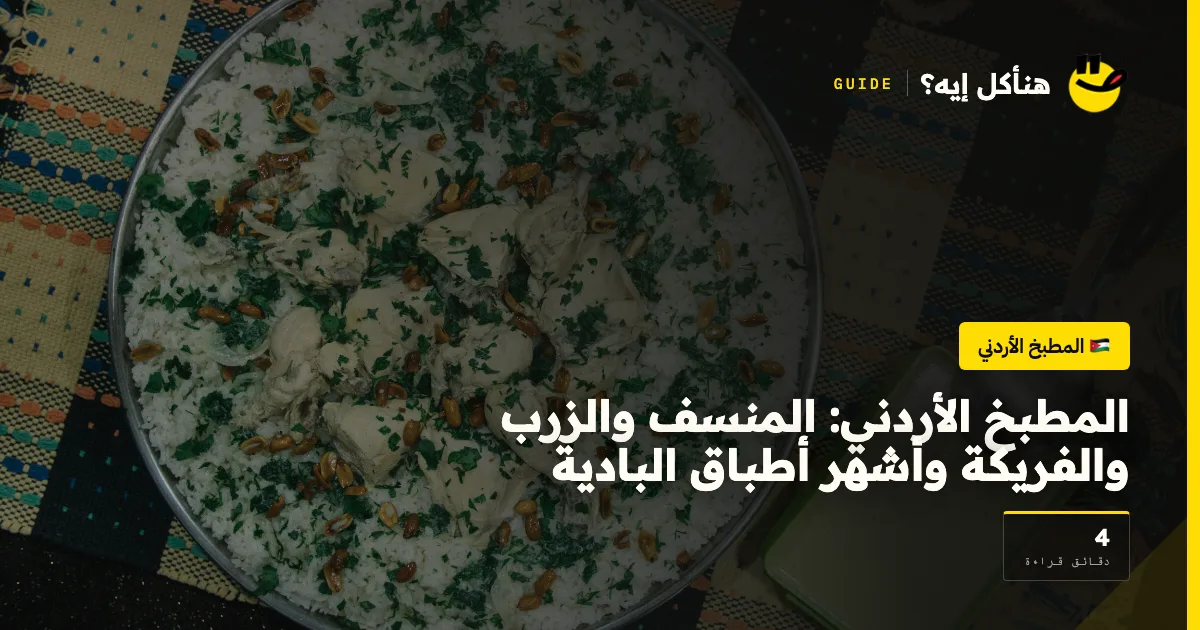
Jordan sits at a crossroads: desert in the east, mountains in the north, and the valley in the west. Its cooking reflects that variety — Bedouin dishes such as mansaf and zarb, Levantine dishes such as musakhan and maqluba, and village dishes such as galayet bandora.
The core dishes
1. Mansaf — the national dish
Lamb in a jameed sauce over rice and shrak bread. Jameed is dried yogurt, soaked overnight, strained, and cooked with continuous stirring in one direction until it boils.
Stopping the stirring before it boils means permanent separation with no way back. Once it has boiled it is safe. The extra insurance: a spoonful of cornflour slaked in cold jameed.
2. Zarb — pit cooking
A pit seventy centimetres deep lined with stones heated by wood for an hour, into which the tray is lowered and sealed completely with earth. The trapped steam cooks the meat so it falls apart without drying.
The oven version comes very close: two tightly crimped layers of foil, 160°C for three hours, then uncovered and browned for twenty minutes at 220°C.
3. Freekeh
Green wheat harvested young and roasted, which gives it a natural smoky flavour. It is washed four to five times until the water runs clear — residual ash gives an obvious bitterness.
4. Galayet bandora
Tomato, garlic and chilli in olive oil. What separates it from an ordinary sauce is high heat — the tomatoes fry and caramelise rather than stew.
5. Fattet hummus
Toasted bread, chickpeas, tahini yogurt sauce, meat and pine nuts. It is assembled immediately before serving — any delay and the bread turns to sponge.
Jameed — the purely Jordanian ingredient
Jameed is sheep's yogurt fermented, salted, shaped into balls and dried in the sun for months until it is hard as stone. Its smell is very sharp and its taste salty and sour.
Real jameed stays very hard. If you find it soft or sweet, it has almost certainly been cut with milk powder.
The mansaf table
Mansaf is served on one large communal tray and guests eat standing, with the right hand. The sheep's head is placed before the most honoured person present — a strict rule of hospitality.
The practical note: the shrak bread is moistened with jameed at the moment of serving, never before, or it turns to paste.
Ingredients worth buying
- Jameed: sold hard or as a tinned liquid, and the hard form is better.
- Sumac: for musakhan and salads.
- Coarse freekeh: its grains stay separate.
- Jordanian olive oil: strong in flavour and suited to galayet and fatteh.
- Jordanian za'atar: coarser and stronger than the Lebanese.
How a meal is ordered
A Jordanian table opens with Levantine mezze — hummus, mutabbal, salads — and the main course is a single dish served on one large shared tray. Yogurt or laban is present alongside everything.
Tea with sage is served after the meal — sage being a local herb with a distinctive flavour, quite different from mint.
Common mistakes
- Stopping the jameed stirring before it boils: permanent separation.
- Washing freekeh once: the ash bitterness remains.
- Moistening the shrak bread early: it turns to paste.
- Medium heat for galayet: the tomatoes stew rather than caramelise.
- Assembling fatteh ahead of time: the bread loses its crispness.
Where to start
Galayet bandora is the easiest entry — fifteen minutes and four ingredients. Then fattet hummus, then freekeh (slow but with simple steps).
Mansaf comes last because it requires mastery of jameed, and zarb needs either an oven or a pit.
Jordanian maqluba and the regions
Maqluba exists in Jordan, Palestine and Syria in closely related versions, differing in the vegetable: in Jordan it is made with aubergine or cauliflower, sometimes both. The constant rule: the vegetables are fried or roasted before layering — raw, they release water and make the rice soggy.
The layering order is the reverse of what you would expect: the best-looking goes at the bottom, because the base becomes the top after inverting. So aubergine or potato slices are arranged carefully in the base, meat or chicken above them, and rice on top.
Jordanian sweets
Nabulsi kunafa is the best known — Palestinian in origin but very widespread in Jordan — followed by harissa (semolina, ghee and syrup), qatayef in Ramadan and maamoul at Eid.
The rule governing sweets across the whole region: hot plus cold. A hot sweet from the oven and cold syrup from the fridge — or the reverse. Both at the same temperature gives a soggy sweet that never crisps.
Desert and town
Jordanian cooking divides between the desert and the towns. Desert dishes — mansaf, zarb, maftoul — are built on meat, dairy and wheat, because that is what was available to herders. Town dishes — musakhan, maqluba, fatteh — are closer to Levantine cooking with more vegetables and olive oil.
The distinction is still visible today: mansaf is made for large occasions, and maqluba is everyday home food.
FAQ
ليه الجميد بيفصل؟
لأنه وصل الغليان من غير تقليب مستمر. بروتين اللبن المجفّف بيتجمّع لو اتسخّن من غير حركة. التقليب المستمر لحد الغليان هو التأمين الوحيد، والنشا خطة احتياطية.
إيه الفرق بين الزرب والمندي؟
الزرب في حفرة مقفولة بالتراب والحرارة من حجارة مسخّنة. المندي في حفرة كمان بس بجمر تحت والصينية معلّقة. الزرب أكتر بخارًا وأطرى.
ليه الفريكة بتطلع مرّة؟
ما اتغسلتش كفاية. الفريكة بتتشوى في الحقل فبيفضل عليها رماد بيدّي مرارة. اغسليها ٤-٥ مرات لحد ما المياه تطلع صافية ١٠٠٪.
Comments
Cooked it? Tell us how it went, or ask a question — we read every comment.