
Palestinian Cuisine: Maqluba, Musakhan, Maftoul and the Secret of Sumac
Palestinian cooking rests on three ingredients: olive oil (Palestine is among the oldest olive-growing regions on earth), sumac (a red, sour, earthy powder), and wild za'atar. Together they give musakhan — the national dish — its distinctive flavour.
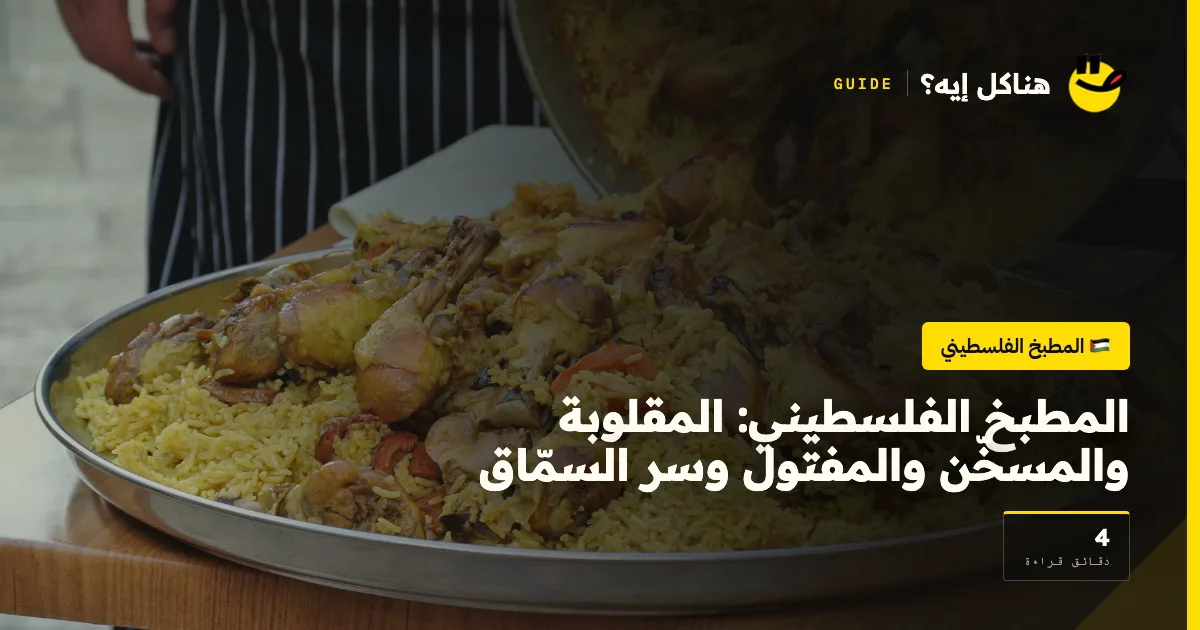
Photo: Christina Garofalo — CC BY 2.0 · Wikimedia Commons
Palestinian cooking is part of the Levantine tradition but carries its own marks: sumac used more heavily than in any other cuisine, olive oil as an ingredient rather than a cooking fat, and maftoul rolled by hand.
The core dishes
1. Musakhan — the national dish
Chicken on taboon bread with a great deal of onion, sumac and olive oil. The ratio that makes the difference: a kilo of onion to one chicken. The onion softens and sweetens and absorbs the sumac and oil, and it is the foundation of the dish rather than a garnish.
The bread must be taboon or another thick bread — it drinks the oil and juices and becomes part of the dish.
2. Maqluba
Rice, chicken and aubergine inverted onto a platter. The inversion is the challenge: the pot must rest for ten minutes after the heat goes off before turning out, and the flip must be one decisive movement.
3. Maftoul
Bulgur grains rolled in flour by hand, larger and coarser than couscous. It is steamed, not boiled — three stages with oil rubbed through between them so the grains stay separate.
4. Vine leaves in oil
The meat-free version: a raw rice filling with tomato, parsley and olive oil, eaten cold. The filling is one teaspoon only, because the rice doubles in size.
5. Maamoul
Semolina and ghee dough filled with date or pistachio. Its secret is that the dough rests overnight — semolina needs a long time to absorb the ghee.
Sumac
The berry of the sumac tree, dried and ground. Deep red in colour with a sour, earthy taste quite unlike lemon. Used in musakhan, fattoush, salads and over grilled meat.
Good sumac is dark red and slightly moist. Pale brown and dry means it is old and has lost its flavour.
Olive oil
Palestine has olive trees hundreds and thousands of years old, and the oil is part of the identity rather than merely an ingredient. In musakhan, fatteh and vine leaves it is used in quantities that look generous — and that is deliberate.
The rule: extra virgin for pouring over the finished dish, ordinary oil for frying.
Ingredients worth buying
- Sumac: the most important ingredient, and it keeps a year.
- Extra virgin olive oil: for pouring, not for frying.
- Wild za'atar blend: for manakish and for eating with oil.
- Maftoul: sold dry and it keeps for months.
- Taboon bread: or any thick bread for musakhan.
How a meal is ordered
A Palestinian table opens with mezze — hummus, mutabbal, salads, pickles — and the main course is one large dish on a shared tray. Olives, oil and za'atar are always present.
Musakhan is eaten by hand — you wrap a piece of chicken in bread soaked with oil and sumac.
Common mistakes
- Too little onion in musakhan: the dish loses its foundation.
- Inverting maqluba without resting: it collapses.
- Boiling maftoul: it turns pasty.
- Overfilling vine leaves: they split.
- Not resting maamoul dough overnight: it crumbles as you shape it.
Where to start
Vine leaves in oil or musakhan are the two easiest entries — both have clear steps. Then maqluba (easy, but the flip takes confidence), then maftoul.
Maamoul comes last because it needs planning from the night before.
Palestinian fatteh
Fatteh in Palestine has many versions: chickpea fatteh, aubergine fatteh, chicken fatteh. The principle is the same in all of them — toasted bread at the base, a main layer above it, a yogurt or tahini sauce, and seasoned ghee at the end.
Timing is everything: assembly happens minutes before eating. Any delay and the bread absorbs the sauce and loses its crispness entirely.
Palestinian mouneh
Mouneh is the seasonal store a household puts up for the year: oil in October after the olive harvest, dried za'atar in summer, makdous (stuffed aubergine in oil) in autumn, and labneh preserved in oil.
Mouneh is not just storage — it is a complete household economy. A home with a good mouneh cuts its monthly shopping considerably and secures higher quality at lower cost.
A practical tip
If you buy one thing to try Palestinian cooking, make it sumac. A small tub opens up musakhan, fattoush and many salads, and it turns any grilled chicken or ordinary salad into something quite different. And it keeps for a full year.
Palestinian bread
Taboon bread is the best known: baked on hot pebbles in a clay oven, so its surface comes out marked with characteristic dimples. Its thickness and porosity make it ideal for musakhan — it drinks the oil and juices without falling apart.
There is also shrak (very thin, baked on a domed griddle) and kmaj (thick and round). Each has its use: shrak for mansaf and wraps, taboon for musakhan, kmaj for sandwiches.
Olives and oil
The olive harvest in October is a full family occasion in Palestine, and the oil it produces lasts the household a year. Palestinian oil is known for its strong, slightly bitter flavour — a mark of quality rather than a fault, because it indicates a high level of antioxidants.
The olives themselves are cured in many ways: green and cracked with lemon and chilli, black in salt, and stuffed with almond. And they are on the breakfast table every single day.
FAQ
What is sumac?
A dried, ground berry, dark red in colour, with a sour, earthy taste. It is used in musakhan, fattoush and salads. Deep red is the mark of quality; pale brown means it is old.
Why does musakhan need so much onion?
The onion isn't a garnish — it is the foundation of the dish. It softens and sweetens, absorbs the sumac and oil, and becomes the layer between the bread and the chicken. The traditional ratio is a kilo of onion per chicken.
Why does my maqluba fall apart when I turn it out?
The pot didn't rest after the heat went off. Ten minutes of resting lets the layers set, and the turn has to be one decisive movement, not a gradual one.

Comments
Cooked it? Tell us how it went, or ask a question — we read every comment.