
Egyptian Roast Country Duck with Crispy Skin
Country duck is boiled until fully cooked before roasting — 1.5 to 2 hours on low heat until a fork easily enters the thigh — and then only 15–20 minutes in a 220°C oven for the skin to brown and crisp up. The main source of gaminess is the tail gland, so it must be removed before boiling; rubbing with flour and lemon alone is not enough.
- Prep
- 40 min
- Cook
- 140 min
- Total
- 3 hr
- Calories
- 540
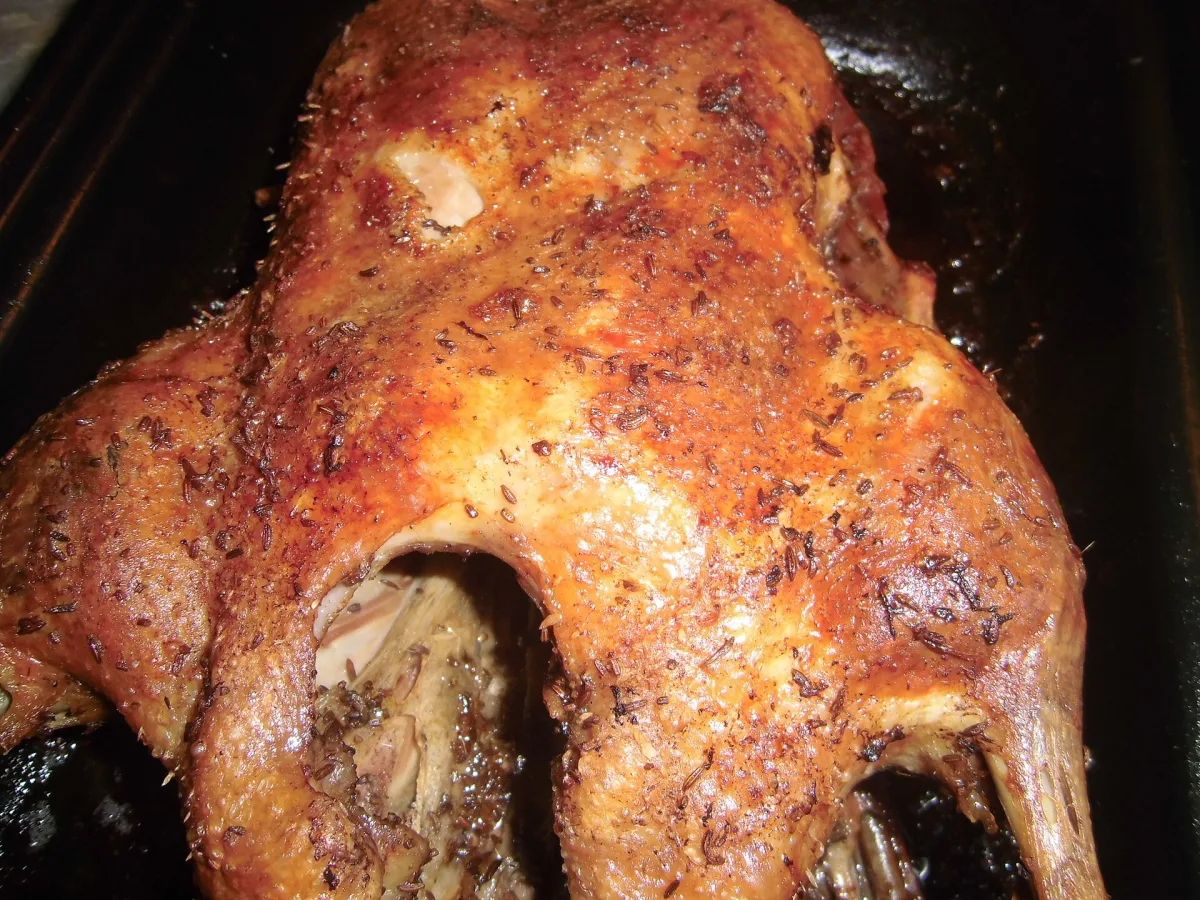
Photo: Makovec / Wikimedia Commons · CC BY-SA 3.0 · https://commons.wikimedia.org/wiki/File:Roast_duck_Entenbraten.JPG
Roasted country duck is the ultimate dish for gatherings and special occasions in Egyptian homes, especially in the countryside: a duck boiled with onions, cardamom, and mastic until it melts, then roasted in the oven or in ghee, with its rich broth used to cook rice or freekeh. The difference between a tender, odorless duck and a tough, gamy one is proper cleaning and boiling time.
Method
-
1
Singeing and Removing Down
Turn on a stovetop burner and quickly pass the duck over the flame from all sides until the fine down burns off, then remove any remaining feathers with tweezers or the tip of a knife. The down that remains leaves a bad smell and appearance after roasting.
⏱ 10 min -
2
Removing the Tail Gland and Excess Fat
Cut off the tail gland — the triangular piece above the tail containing the gland — from underneath with a sharp knife, and remove the clumps of fat near the duck opening and any lung remnants stuck to the ribs inside. This gland is the main source of gaminess.
⏱ 5 min -
3
Rubbing with Flour, Salt, and Lemon
Rub the duck from outside and inside with flour and coarse salt, leave it for 5 minutes, and wash it well with water. Then rub it with the cut lemon and rinse it again. The flour collects dirt and remaining down, and the lemon removes surface odors.
⏱ 10 min -
4
Piercing the Skin
Prick the duck's skin with a fork or the tip of a knife in areas with thick fat — the breast and thighs — without reaching the meat. These slits let the fat melt and escape during boiling and roasting, so the skin browns and gets crispy instead of staying rubbery.
⏱ 3 min -
5
Boiling and Skimming Foam
Place the duck in a large pot and cover it with water (about 12 cups) over high heat. As soon as it boils, thoroughly skim the foam for 5–10 minutes until the water is clear — if left, this foam makes the broth cloudy and brings back the gaminess.
⏱ 15 min -
6
Simmering on Low Heat
Add the onions, carrot, bay leaves, cardamom, mastic, cinnamon, peppercorns, and salt, then lower the heat and cover the pot. Leave it for 1.5 to 2 hours until a fork easily enters the thigh. A smaller duck finishes sooner, so test it after 1.25 hours — overcooking causes the meat to fall apart and the skin to tear in the oven.
⏱ 105 min -
7
Drying and Seasoning
Preheat the oven to 220°C. Transfer the duck to a rack and let it dry for 10 minutes, then cut it into quarters or leave it whole. Mix the ghee with the garlic, paprika, and pepper, and brush it all over the skin. Only dry skin gets crispy.
⏱ 10 min -
8
Roasting in the Oven
Arrange the duck breast-side up on a baking sheet, and place it in the upper-middle rack for 15–20 minutes until the skin is deep golden — turn on the broiler for the last few minutes if the oven doesn't brown from the top. The duck is already cooked, so leaving it longer will dry it out.
⏱ 20 min -
9
Broth and Serving
Strain the duck broth and let it sit for a few minutes, then skim off the fat that rises to the top — leave a couple of tablespoons for the rice and discard the rest. Serve the duck with rice or freekeh cooked in its broth, and a hot bowl of soup on the side.
⏱ 5 min
Cooked it? Rate it
Your rating tells the next cook whether this recipe is worth their time.
✓ Thanks — your rating is in.
Tips that actually matter
- In a pressure cooker: after skimming the foam, close the cooker and calculate 35–45 minutes from the first whistle depending on the duck's size, then open and test the thigh before roasting.
- Want to roast it in a pan instead of the oven? Heat 2 tablespoons of ghee in a wide skillet over medium-high heat, and sear the pieces for 3–4 minutes on each side, skin-side down first.
- Wash 2 cups of freekeh and drain them, sauté them in 2 tablespoons of duck fat with a chopped onion, add 6 cups of hot broth, and leave it covered on low heat for 35–45 minutes until it absorbs the broth and cooks.
- Don't throw away the duck fat you skimmed from the broth: store it in a jar in the fridge, and use it to fry potatoes or sauté rice — it tastes better than oil.
People also ask
How do I remove the gaminess from the duck?
The smell primarily comes from the tail gland — the tail's oil gland — so cut it off before anything else. Then singe the down, rub the duck with flour and salt followed by lemon, skim the foam as soon as the broth boils, and boil it with onions, cardamom, mastic, and bay leaves. These spices mask any remaining odor and give the broth its well-known flavor.
How long does country duck take to boil?
From 1.5 to 2 hours on low heat for a medium duck (2–2.5 kg), and an older duck may take longer. In a pressure cooker, 35–45 minutes from the whistle. The reliable sign to check: a fork enters the thigh easily, and the meat starts pulling away from the bone.
Why does duck skin turn out rubbery and not crispy?
Because the fat under the skin didn't escape: the duck wasn't pricked, went into the oven wet, or the oven wasn't hot enough. Prick the skin before boiling, dry it for 10 minutes afterward, and roast it at 220°C on the upper rack.
How do I make rice with duck broth?
Sauté the rice in a spoonful of duck fat or ghee for two minutes, and add hot duck broth: 1.25 cups of broth per cup of soaked Egyptian rice, or 1.5 cups if unsoaked. Let it boil, reduce the heat to the lowest setting, cover, and cook for 20 minutes.
Cook mode
Egyptian Roast Country Duck with Crispy Skin
-
1
Singeing and Removing Down
Turn on a stovetop burner and quickly pass the duck over the flame from all sides until the fine down burns off, then remove any remaining feathers with tweezers or the tip of a knife. The down that remains leaves a bad smell and appearance after roasting.
-
2
Removing the Tail Gland and Excess Fat
Cut off the tail gland — the triangular piece above the tail containing the gland — from underneath with a sharp knife, and remove the clumps of fat near the duck opening and any lung remnants stuck to the ribs inside. This gland is the main source of gaminess.
-
3
Rubbing with Flour, Salt, and Lemon
Rub the duck from outside and inside with flour and coarse salt, leave it for 5 minutes, and wash it well with water. Then rub it with the cut lemon and rinse it again. The flour collects dirt and remaining down, and the lemon removes surface odors.
-
4
Piercing the Skin
Prick the duck's skin with a fork or the tip of a knife in areas with thick fat — the breast and thighs — without reaching the meat. These slits let the fat melt and escape during boiling and roasting, so the skin browns and gets crispy instead of staying rubbery.
-
5
Boiling and Skimming Foam
Place the duck in a large pot and cover it with water (about 12 cups) over high heat. As soon as it boils, thoroughly skim the foam for 5–10 minutes until the water is clear — if left, this foam makes the broth cloudy and brings back the gaminess.
-
6
Simmering on Low Heat
Add the onions, carrot, bay leaves, cardamom, mastic, cinnamon, peppercorns, and salt, then lower the heat and cover the pot. Leave it for 1.5 to 2 hours until a fork easily enters the thigh. A smaller duck finishes sooner, so test it after 1.25 hours — overcooking causes the meat to fall apart and the skin to tear in the oven.
-
7
Drying and Seasoning
Preheat the oven to 220°C. Transfer the duck to a rack and let it dry for 10 minutes, then cut it into quarters or leave it whole. Mix the ghee with the garlic, paprika, and pepper, and brush it all over the skin. Only dry skin gets crispy.
-
8
Roasting in the Oven
Arrange the duck breast-side up on a baking sheet, and place it in the upper-middle rack for 15–20 minutes until the skin is deep golden — turn on the broiler for the last few minutes if the oven doesn't brown from the top. The duck is already cooked, so leaving it longer will dry it out.
-
9
Broth and Serving
Strain the duck broth and let it sit for a few minutes, then skim off the fat that rises to the top — leave a couple of tablespoons for the rice and discard the rest. Serve the duck with rice or freekeh cooked in its broth, and a hot bowl of soup on the side.

Comments
Cooked it? Tell us how it went, or ask a question — we read every comment.