
Saidi Kashk with Chicken Broth and Crispy Onions
The secret to Saidi Kashk is that the kashk balls are soaked for 8 hours until they can be rubbed between your fingers, then blended and strained before going into the broth. Afterwards, stirring must not stop for 20-25 minutes over low heat, because kashk sticks and clumps as soon as you leave it. And only salt at the very end, because fermented kashk is salty on its own.
- Prep
- 20 min
- Cook
- 80 min
- Total
- 10 hr
- Calories
- 570
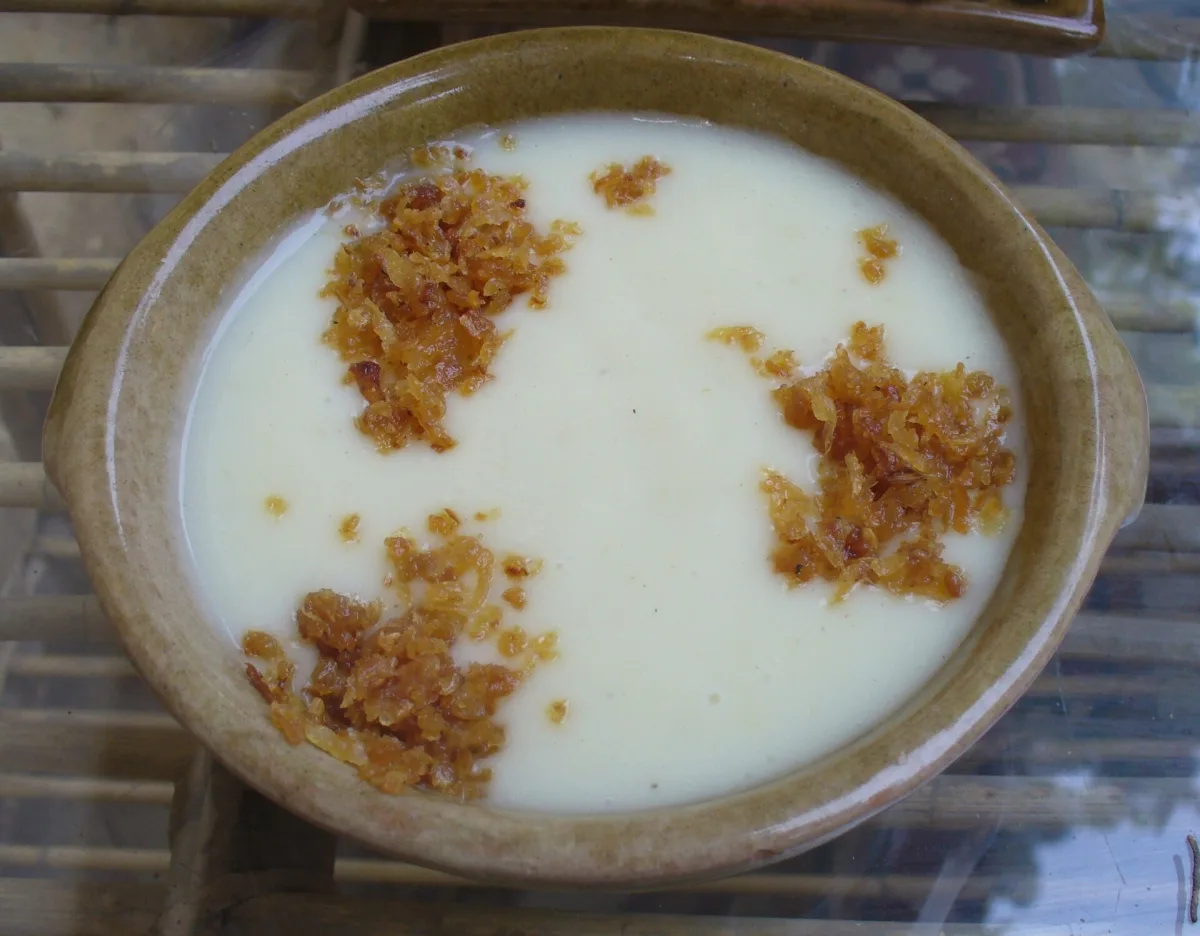
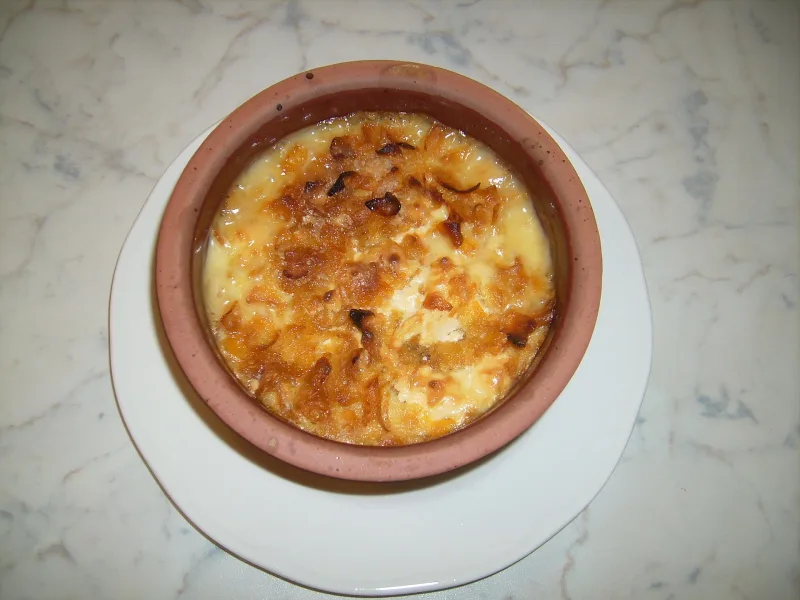
Photo: Cairocamels B. Simpson / Wikimedia Commons · CC BY 3.0 · https://commons.wikimedia.org/wiki/File:Kishk.JPG
Saidi Kashk is the ultimate winter and celebration dish in Upper Egypt: dried balls made of cracked wheat and fermented sour laban, soaked and cooked in chicken or duck broth until it becomes a thick, slightly sour cream, topped with fried onions in baladi ghee. It is served hot with bread alongside fried chicken.
Method
-
1
Soaking the Kashk
Break the kashk balls with your hands or in a mortar into small pieces, put them in a bowl and cover with 3 cups of lukewarm water, and leave for 8 hours or overnight. Hard kashk is like rock, and without enough soaking it leaves grains that clump in the pot. The sign is when the piece rubs between your fingers like dough.
⏱ 10 min -
2
Boiling the Chicken
Put the chicken in a pot and cover with water, and as soon as it boils skim the foam for 10 minutes so the broth comes out clear. Add the onion, bay leaves, cardamom, and mastic, lower the heat and cover for 45 minutes until the chicken is done. Strain the broth and keep 5 cups of it.
⏱ 55 min -
3
Blending and Straining the Kashk
Put the soaked kashk with its water in the blender and blend for 2 minutes until smooth like yogurt. Strain it through a fine strainer and press with the back of a spoon, and discard the coarse bran left on top; that is what makes kashk grainy in the mouth.
⏱ 5 min -
4
Cooking the Kashk
In a heavy-bottomed pot, put 4 cups of warm broth (not boiling), and pour the kashk over it while whisking. Turn on medium heat and stir with a wooden spoon without stopping, and as soon as it starts bubbling lower the heat and continue for 20–25 minutes. The right consistency coats the back of a spoon like light muhallebi; if it gets too thick add from the remaining cup.
⏱ 25 min -
5
Frying the Onions
In a pan, melt 3 tablespoons of ghee and add the onion slices over medium heat, stirring for 12–15 minutes until they take a dark golden color and get crispy. Take a third of the onions with their ghee and stir them into the kashk while it is on the heat to give it flavor, and leave the rest for the top.
⏱ 15 min -
6
Adjusting the Salt
Taste the kashk before adding any salt; Saidi kashk is fermented and salty on its own, and will usually need a small pinch or nothing at all. Add the black pepper, stir for a minute and remove from the heat.
⏱ 2 min -
7
Searing the Chicken
Pat the chicken pieces dry with paper towels, and sear them in the remaining tablespoon of ghee over high heat for 8–10 minutes until the skin colors. Fried chicken is what is served alongside kashk in Upper Egypt.
⏱ 10 min -
8
Serving
Pour the hot kashk into deep bowls or clay tagines, and distribute the fried onions and some of the topping ghee on top. Serve immediately with shouhsy or baladi bread and chicken; it thickens the longer it cools.
⏱ 3 min
Cooked it? Rate it
Your rating tells the next cook whether this recipe is worth their time.
✓ Thanks — your rating is in.
Tips that actually matter
- Good Saidi kashk is off-white tending to beige with a light sour scent like yogurt. If it smells bad or you see weevils or green spots, do not use it.
- Store kashk balls in a tightly closed glass jar in a dry place away from the sun; they last for many long months as long as they stay dry.
- Try it with duck or rabbit broth like Saidi weddings; richer broth gives tastier kashk.
- Want a tastier top? Make the onion frying at the very end and pour it sizzling over the kashk in the bowl.
People also ask
Why does kashk clump or stick to the pot?
It clumps when it is not soaked enough or not blended and strained, and sticks when the heat is high or stirring stops. Soak it for 8 hours, blend and strain it, pour it over warm not boiling broth, and use a heavy-bottomed pot and stir nonstop over low heat.
Can I make kashk without dried kashk balls?
You can make a quick version: whisk a cup of yogurt (sour laban) with half a cup of flour and a cup of milk until smooth, and pour it gradually over 4 cups of hot broth while stirring, and leave it for 10–15 minutes on low heat until thick. The taste will be lighter and less sour than fermented Saidi kashk, but the texture is close.
How long does Saidi kashk soak?
From 6 to 8 hours in lukewarm water, and best of all overnight. If you are in a rush soak it in hot water for two hours and blend it longer in the blender, but it will come out less smooth and you will need to strain it well.
Can I reheat kashk or freeze it?
It keeps in the fridge for two days in a closed container. Reheat it on low heat with half a cup of broth or water and stir until its texture returns, because it firms up when cold. Freezing is not the best for it, because it can separate and become grainy after thawing.
Cook mode
Saidi Kashk with Chicken Broth and Crispy Onions
-
1
Soaking the Kashk
Break the kashk balls with your hands or in a mortar into small pieces, put them in a bowl and cover with 3 cups of lukewarm water, and leave for 8 hours or overnight. Hard kashk is like rock, and without enough soaking it leaves grains that clump in the pot. The sign is when the piece rubs between your fingers like dough.
-
2
Boiling the Chicken
Put the chicken in a pot and cover with water, and as soon as it boils skim the foam for 10 minutes so the broth comes out clear. Add the onion, bay leaves, cardamom, and mastic, lower the heat and cover for 45 minutes until the chicken is done. Strain the broth and keep 5 cups of it.
-
3
Blending and Straining the Kashk
Put the soaked kashk with its water in the blender and blend for 2 minutes until smooth like yogurt. Strain it through a fine strainer and press with the back of a spoon, and discard the coarse bran left on top; that is what makes kashk grainy in the mouth.
-
4
Cooking the Kashk
In a heavy-bottomed pot, put 4 cups of warm broth (not boiling), and pour the kashk over it while whisking. Turn on medium heat and stir with a wooden spoon without stopping, and as soon as it starts bubbling lower the heat and continue for 20–25 minutes. The right consistency coats the back of a spoon like light muhallebi; if it gets too thick add from the remaining cup.
-
5
Frying the Onions
In a pan, melt 3 tablespoons of ghee and add the onion slices over medium heat, stirring for 12–15 minutes until they take a dark golden color and get crispy. Take a third of the onions with their ghee and stir them into the kashk while it is on the heat to give it flavor, and leave the rest for the top.
-
6
Adjusting the Salt
Taste the kashk before adding any salt; Saidi kashk is fermented and salty on its own, and will usually need a small pinch or nothing at all. Add the black pepper, stir for a minute and remove from the heat.
-
7
Searing the Chicken
Pat the chicken pieces dry with paper towels, and sear them in the remaining tablespoon of ghee over high heat for 8–10 minutes until the skin colors. Fried chicken is what is served alongside kashk in Upper Egypt.
-
8
Serving
Pour the hot kashk into deep bowls or clay tagines, and distribute the fried onions and some of the topping ghee on top. Serve immediately with shouhsy or baladi bread and chicken; it thickens the longer it cools.

Comments
Cooked it? Tell us how it went, or ask a question — we read every comment.