
Italian Rosemary Focaccia
Focaccia is a flat Italian bread made from a high-hydration dough (75–80% water), fermented slowly, dimpled with the fingertips and drowned in olive oil before baking. The oil that pools in the dimples is what fries the surface and gives it its crispness.
- Prep
- 25 min
- Cook
- 25 min
- Total
- 50 min
- Calories
- 280
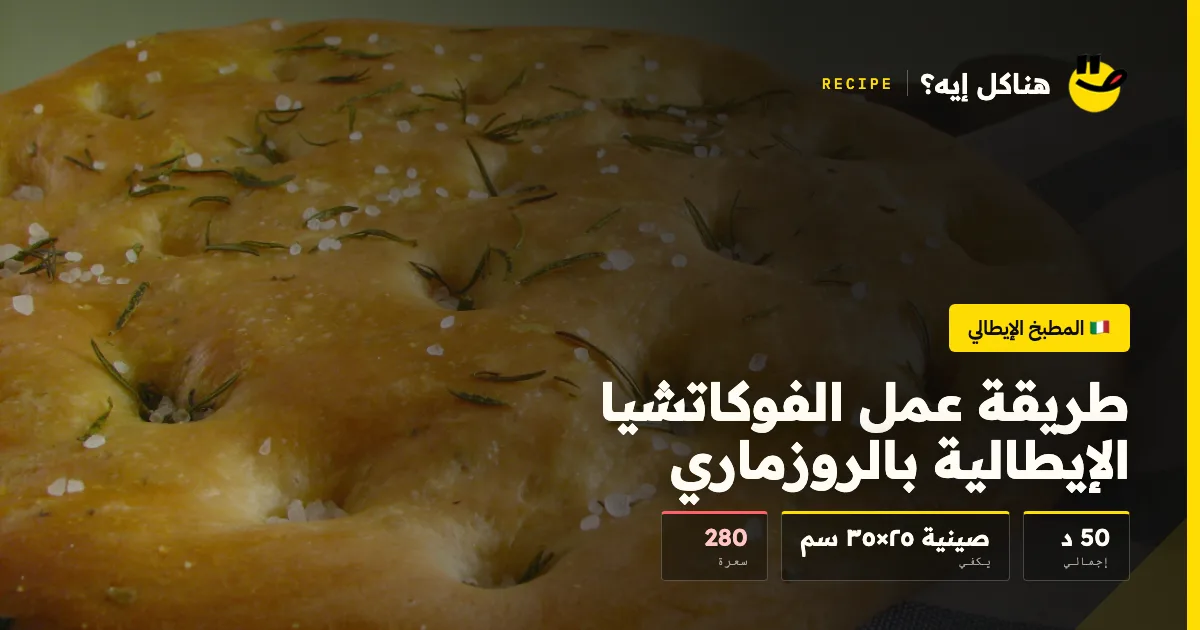
Photo: Parkerman & Christie from San Diego, USA — CC BY 2.0 · Wikimedia Commons
Focaccia is one of the easiest breads to make at home — no shaping or rolling, just a slack dough, plenty of olive oil and patience. The result is a bread with a crisp base and a spongy middle.
Method
-
1
Mixing the dough
Mix the flour, yeast and sugar, add the lukewarm water and stir with a wooden spoon until you have a slack, sticky dough — this dough isn’t kneaded by hand. Add the salt and 30 ml olive oil and stir for another minute.
-
2
Folds instead of kneading
Cover the dough and leave it for 15 minutes, then wet your hand, pull one side of the dough up and fold it over the middle. Repeat 4 times as you turn the bowl. Do this 3 times, every 30 minutes. Each set of folds strengthens the gluten without kneading.
-
3
Cold fermentation
Cover the dough and put it in the fridge for 8 to 24 hours. The slow, cold fermentation is what gives focaccia its deep flavour and big holes — a quick rise gives ordinary bread with no character.
-
4
The tray and the rest
Pour 30 ml olive oil into a metal tray and spread it, then turn the dough into it without knocking out the air. Cover it and leave it in a warm place for 2 hours until it reaches room temperature and puffs up.
-
5
Dimples and salamoia
Mix 40 ml olive oil with 60 ml lukewarm water and a pinch of salt — this mixture is called salamoia. Pour it over the dough, then push your fingertips down to the bottom of the tray all over. The dimples trap the oil, which fries the surface from below.
-
6
Baking
Scatter over the rosemary and flaky salt, and bake at 220°C for 22–25 minutes on the lowest shelf until the top is golden and the base is crisp. Move it onto a wire rack at once so the steam doesn’t soften the base.
Cooked it? Rate it
Your rating tells the next cook whether this recipe is worth their time.
✓ Thanks — your rating is in.
Tips that actually matter
- The dough is slack and sticky — that is right, not wrong. Wet your hands instead of adding flour.
- An overnight cold fermentation makes the biggest difference to the flavour.
- Push your fingers right down to the bottom of the tray — shallow dimples disappear in the oven.
- Don’t be stingy with the olive oil — it fries the base and gives the flavour.
- Move it onto a wire rack straight away so the base stays crisp.
People also ask
Why is the dough so sticky?
Because the hydration is 80%, and that is how it should be. The stickiness gives the big holes and the spongy middle. Wet your hands with water or oil before handling it, and don’t add extra flour.
Can I skip the cold fermentation?
Yes — let it rise for 2 hours in a warm place instead of the fridge. It will turn out well, but the flavour will be simpler and the holes smaller. Cold fermentation brings out deeper flavours from the yeast.
Why is the base soft, not crisp?
There was too little oil in the tray, the tray wasn’t on the lowest shelf, or the bread stayed in the tray after baking. You need at least 30 ml of oil, the lowest shelf, and to move it onto a wire rack straight away.
How long does it keep?
It is best on the day. It keeps for two days in a sealed bag at room temperature — warm it for 5 minutes at 180°C before serving so it crisps again. It also freezes for 3 months.
Cook mode
Italian Rosemary Focaccia
-
1
Mixing the dough
Mix the flour, yeast and sugar, add the lukewarm water and stir with a wooden spoon until you have a slack, sticky dough — this dough isn’t kneaded by hand. Add the salt and 30 ml olive oil and stir for another minute.
-
2
Folds instead of kneading
Cover the dough and leave it for 15 minutes, then wet your hand, pull one side of the dough up and fold it over the middle. Repeat 4 times as you turn the bowl. Do this 3 times, every 30 minutes. Each set of folds strengthens the gluten without kneading.
-
3
Cold fermentation
Cover the dough and put it in the fridge for 8 to 24 hours. The slow, cold fermentation is what gives focaccia its deep flavour and big holes — a quick rise gives ordinary bread with no character.
-
4
The tray and the rest
Pour 30 ml olive oil into a metal tray and spread it, then turn the dough into it without knocking out the air. Cover it and leave it in a warm place for 2 hours until it reaches room temperature and puffs up.
-
5
Dimples and salamoia
Mix 40 ml olive oil with 60 ml lukewarm water and a pinch of salt — this mixture is called salamoia. Pour it over the dough, then push your fingertips down to the bottom of the tray all over. The dimples trap the oil, which fries the surface from below.
-
6
Baking
Scatter over the rosemary and flaky salt, and bake at 220°C for 22–25 minutes on the lowest shelf until the top is golden and the base is crisp. Move it onto a wire rack at once so the steam doesn’t soften the base.




Comments
Cooked it? Tell us how it went, or ask a question — we read every comment.